EPR Certificate for Battery Waste 

EPR Certificate for Battery Waste 

Extended Producer Responsibility (EPR)
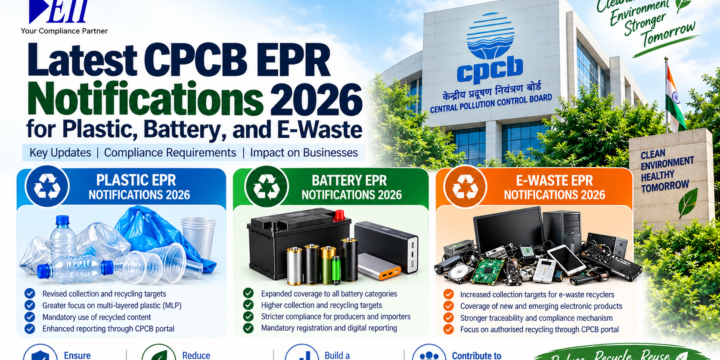
The surge in electronic devices, electric vehicles, and renewable energy systems has significantly increased battery usage in India. As a result, battery waste generation has also risen, posing serious environmental risks. To address this, the government introduced strict regulations requiring businesses to obtain an EPR Certificate for Battery Waste. Extended Producer Responsibility ensures that producers are accountable for the lifecycle of batteries, including their disposal and recycling. In this blog, we will cover everything about EPR Certificate for Battery Waste, including registration, compliance, and benefits. Understanding EPR Certificate for Battery Waste An EPR Certificate for Battery Waste is a mandatory approval issued by CPCB that authorizes businesses to handle battery waste responsibly. It ensures compliance with EPR for Battery waste rules and promotes sustainable practices. The EPR Certificate for Battery…
Read More
EPR Certificate for E-Waste 

EPR Certificate for E-Waste 

Extended Producer Responsibility (EPR)
The increasing use of electronic devices has led to a surge in e-waste generation across India. Improper disposal of such waste poses serious environmental and health risks. To address this issue, the government has made it mandatory for businesses to obtain an EPR Certificate for E-waste. Under the framework of EPR for E-waste management, producers are responsible for collecting and recycling electronic waste generated from their products. This blog provides a detailed overview of the EPR Certificate for E-waste, its importance, process, and how ElectronicsIndia can help businesses achieve compliance. What is an EPR Certificate for E-Waste? The EPR Certificate for E-waste is an official authorization issued by CPCB that allows businesses to manage electronic waste responsibly. It is a crucial part of EPR for Electronic waste, ensuring that companies…
Read More
EPR Certificate for Plastic

EPR Certificate for Plastic

Extended Producer Responsibility (EPR)
As environmental regulations tighten across India, businesses must take responsibility for the plastic waste they generate. The EPR Certificate for Plastic has become a mandatory requirement for companies involved in plastic production, import, and packaging. The concept of Extended Producers Responsibility for plastic packaging ensures that producers manage the lifecycle of plastic waste. With increasing enforcement by authorities, obtaining an EPR Certificate for Plastic is no longer optional but a legal necessity. In this blog, we will explore the compliance requirements, benefits, and registration process for EPR Registration for Plastic Waste, along with how ElectronicsIndia can assist businesses in achieving seamless compliance. What is an EPR Certificate for Plastic? The EPR Certificate for Plastic is an official authorization issued by the Central Pollution Control Board (CPCB). It ensures that businesses…
Read More
EPR Certification in Delhi

EPR Certification in Delhi

Extended Producer Responsibility (EPR)
Environmental regulations in India have evolved significantly to ensure sustainable industrial growth. One of the most important compliance requirements today is the EPR Certification in Delhi, which applies to producers, importers, and brand owners operating in regulated product categories. The objective of this certification is to ensure responsible waste management and accountability throughout the product lifecycle. Delhi, being a major commercial and manufacturing hub, follows strict monitoring by regulatory authorities. As highlighted by compliance-focused platforms like ElectronicsIndia, businesses must now align operations with extended producer responsibility norms to avoid penalties and ensure uninterrupted operations. Understanding EPR Certification Extended Producer Responsibility is a legal framework under which businesses are required to manage the post-consumer waste generated from their products. The Extended Producer Responsibility Certificate is issued by the Central Pollution Control…
Read More
EPR Consultant in India

EPR Consultant in India

Extended Producer Responsibility (EPR)
India’s environmental regulations are becoming more structured and enforcement-driven. Businesses dealing with regulated products must comply with Extended Producer Responsibility (EPR) norms to operate legally. An experienced EPR consultant in India plays a crucial role in helping organizations meet these obligations while adopting sustainable waste management practices. From documentation to approvals and compliance reporting, EPR requirements can be technically demanding. Professional consultancy ensures that businesses avoid regulatory risks and focus on growth. Extended Producer Responsibility Explained Extended Producer Responsibility is a regulatory framework that makes producers responsible for managing waste generated from their products after consumer use. The goal of extended producer responsibility is to minimize environmental damage by ensuring proper collection, recycling, and disposal of waste. EPR regulations apply across multiple categories and require producers to obtain EPR registration…
Read More
EPR Certification

EPR Certification

Extended Producer Responsibility (EPR)
As India strengthens its environmental regulations, businesses are increasingly required to adopt sustainable practices. EPR Certification has emerged as a key compliance requirement for producers, importers, and brand owners dealing with regulated products. By implementing extended producer responsibility, companies play a direct role in managing post-consumer waste and protecting the environment. This blog explains the importance of EPR Certification in India, the approval framework, and how compliance partners like ElectronicsIndia support businesses in achieving seamless environmental compliance. What is an Extended Producer Responsibility Certificate? An Extended Producer Responsibility Certificate is an official authorization that confirms a business’s commitment to managing waste generated from its products. It ensures that producers follow prescribed environmental guidelines for collection, recycling, and disposal. Holding a valid EPR certificate reflects a company’s dedication to responsible manufacturing…
Read More
EPR Certificate Consultant for Plastic, Battery & E-Waste Management 

EPR Certificate Consultant for Plastic, Battery & E-Waste Management 

Extended Producer Responsibility (EPR)
India’s environmental regulations are becoming increasingly stringent, especially with rising concerns about plastic waste, battery disposal, and e-waste management. Extended Producer Responsibility (EPR) has emerged as a major compliance requirement for manufacturers, importers, brand owners, and producers across industries. As businesses struggle with complex documentation and regulatory challenges, the demand for a professional EPR Certificate Consultant is at an all-time high. This detailed guide explains how EPR certification works, its importance, and why choosing a trusted consultant like Electronicsindia is essential for smooth approval and 100% regulatory compliance. What Is an EPR Certificate and Why Is It Required? The EPR certificate is issued by the Central Pollution Control Board (CPCB) under the Extended Producer Responsibility framework. It mandates that Producers, Importers, and Brand Owners (PIBOs) manage waste generated by their…
Read More
Why Hire EPR Certificate Consultants for Sustainability

Why Hire EPR Certificate Consultants for Sustainability

Extended Producer Responsibility (EPR)
In recent years, Indian policy has emphasised the concept of extended producer responsibility to enable sustainable product-lifecycle management, especially for electronic, battery, plastic-packaging, and tyre waste. Securing an EPR certificate (also called the Extended Producer Responsibility Certificate) is now a legal necessity for many producers, importers, and brand owners. Engaging expert epr certificate consultants not only helps you obtain the certificate and meet environmental compliance, but can also unlock strategic advantages for your business. Here’s how. From Compliance to Strategic Advantage Often, companies view regulatory obligations simply as a cost or burden. However, when seen through the lens of sustainability and business reputation, obtaining that EPR certificate becomes an opportunity. With proper extended producer responsibility implementation, you demonstrate to stakeholders — customers, regulators, investors — that you are serious about…
Read More
EPR for Battery

EPR for Battery

Extended Producer Responsibility (EPR)
With the rapid penetration of electric vehicles, smart electronics, energy storage devices, and portable gadgets, battery usage in India has increased exponentially. However, discarded batteries pose a major environmental risk due to toxic chemicals and heavy metals. To curb this issue, the Indian government has mandated EPR for batteries, making producers legally responsible for the collection, recycling, and disposal of batteries after their end-of-life. This legislation is a crucial part of the Battery Waste Management Rules and aims to create a circular economy framework in which discarded batteries are reprocessed and reused rather than dumped. What Does EPR for Battery Mean? Extended Producer Responsibility for batteries requires producers (manufacturers, importers, assemblers, and brand owners) to ensure that waste batteries are collected and recycled through authorized channels. It shifts responsibility from…
Read More
Revamped E-Waste Management in India: A Sustainable Approach for the Future

Revamped E-Waste Management in India: A Sustainable Approach for the Future

Extended Producer Responsibility (EPR)
India, the third-largest producer of electronic waste (e-waste) globally, has been grappling with the growing challenge of e-waste disposal. With millions of electronic devices becoming obsolete every year, the improper handling of these waste materials has led to severe environmental and health hazards. However, recent changes to India’s e-waste regulations are paving the way for better management and recycling practices, ensuring a more sustainable future. The Ministry of Environment, Forest, and Climate Change (MoEFCC) has introduced revised E-Waste (Management) Rules in 2022, marking a significant shift in India’s approach to handling electronic waste. These new regulations seek to formalize and strengthen the e-waste sector, enhance the recycling framework, and impose stricter accountability on producers and recyclers alike. Key Features of the New E-Waste (Management) Rules The updated E-Waste (Management) Rules,…
Read More